Home » Geegatech: Leading Digital Transformation with CMMI Level 3 Expertise in Indore
In 2026, digital transformation is no longer a trend—it is a necessity. Businesses across industries are adopting digital technologies to improve efficiency, enhance customer experience, and stay competitive in a rapidly evolving market.Digital transformation involves integrating technology into all areas of a business, fundamentally changing how it operates and delivers value to customers.This guide provides a comprehensive overview of digital transformation, including its benefits, strategies, technologies, and implementation process.
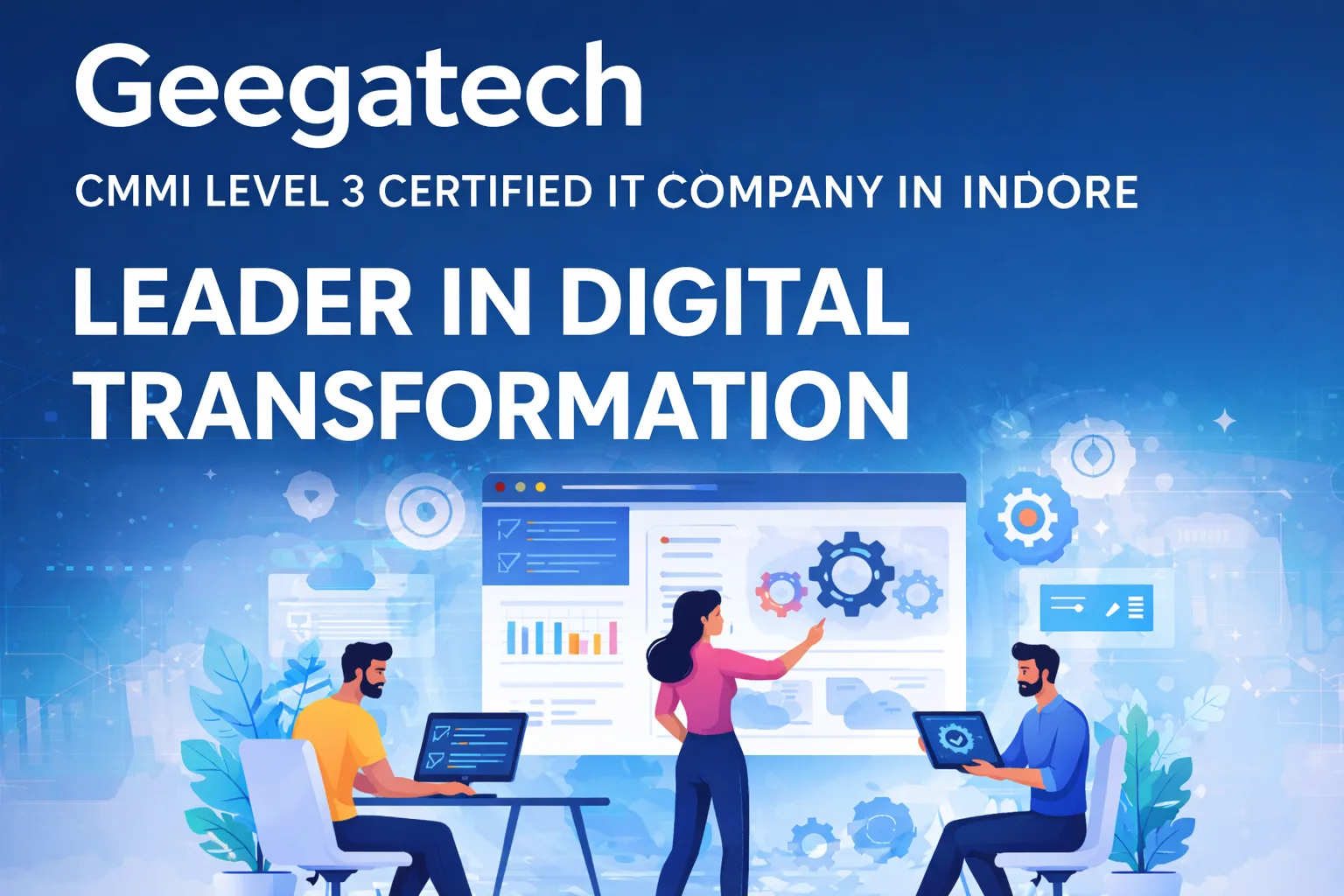
Digital transformation is the process of using digital technologies to improve business processes, customer experiences, and overall organizational performance.
It goes beyond simply adopting new software or tools. Successful digital transformation requires process optimization, innovation, cultural change, and long-term strategic planning.
Modern customers expect fast, seamless, and personalized digital experiences. Businesses that fail to meet these expectations risk losing customers to competitors.
Companies across every industry are investing in digital technologies. Businesses must continuously innovate to stay competitive in rapidly changing markets.
Automation and digital systems reduce manual tasks, improve productivity, and help businesses operate more efficiently.
Real-time data and analytics enable organizations to make smarter business decisions based on insights rather than assumptions.
Businesses need to implement modern technologies such as cloud platforms, CRM systems, automation tools, and AI-driven solutions.
Digital transformation focuses on improving workflows, eliminating inefficiencies, and creating streamlined operations.
Organizations must encourage innovation, adaptability, and collaboration among employees to support digital transformation initiatives.
Enhancing customer interactions through personalized services, faster communication, and better support is a major goal of digital transformation.
Cloud technology provides scalability, remote accessibility, flexibility, and cost-effective infrastructure solutions for businesses.
AI improves automation, customer service, predictive analytics, and operational decision-making.
IoT connects devices and systems, enabling businesses to collect real-time data and improve operational efficiency.
Data analytics helps organizations gain valuable insights, improve customer understanding, and optimize business performance.
Automation and optimized workflows reduce operational delays and improve overall business productivity.
Digital tools enable businesses to provide personalized experiences, faster support, and improved customer satisfaction.
Digital solutions create new business models, online revenue streams, and market expansion opportunities.
Businesses that innovate faster through digital transformation can stand out in competitive markets.
Evaluate existing systems, workflows, strengths, and operational challenges before starting digital transformation.
Set measurable objectives such as improving efficiency, reducing costs, enhancing customer experience, or increasing revenue.
Select digital tools and platforms that align with your business goals and future scalability requirements.
Develop a structured plan that outlines phases, timelines, responsibilities, and expected outcomes.
Implement the transformation strategy gradually and continuously monitor performance for improvements.
Employees may resist new technologies or workflow changes due to fear or lack of understanding.
Digital transformation projects often require significant investment in software, infrastructure, and training.
Combining modern technologies with existing legacy systems can be technically challenging.
As businesses become more digital, protecting sensitive data and systems becomes increasingly important.
Retail businesses use e-commerce platforms, AI-driven recommendations, and personalized marketing strategies.
Healthcare organizations implement digital patient records, telemedicine, and AI-based diagnostics.
Manufacturers use automation, robotics, and smart factory technologies to improve production efficiency.
Educational institutions adopt online learning platforms, virtual classrooms, and digital collaboration tools.
The cost of digital transformation depends on the project scope, technologies used, and business requirements.
Digital transformation requires expertise across multiple domains including software development, cloud computing, cybersecurity, automation, and data analytics.
A professional development company can help businesses:
Digital transformation is essential for businesses that want to thrive in 2026 and beyond. By adopting modern technologies and optimizing business processes, organizations can improve efficiency, deliver better customer experiences, and achieve sustainable growth.
Whether you are a startup, small business, or large enterprise, investing in digital transformation can help future-proof your organization and create long-term competitive advantages.


Speak directly with our engineering team to audit your requirements, architecture, and timeline.