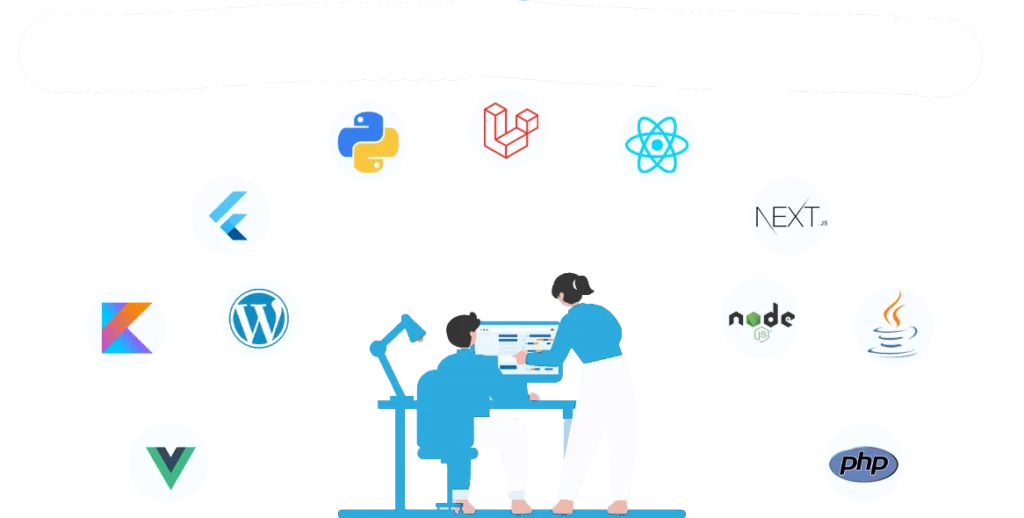

A tech stack is the backbone of any digital product — a combination of technologies used to build and run an application. Choosing the right one can define your startup’s trajectory.
For any startup founder, few decisions carry as much long-term weight as picking your technology foundation. It shapes your hiring process, your development speed, your infrastructure costs, and your ability to scale when growth hits. Many early-stage companies have made costly mistakes by choosing technologies that seemed trendy but turned out to be difficult to maintain or scale. This comprehensive guide walks you through everything you need to know before making that critical decision — so you can build smart from day one.
A tech stack is a combination of technologies — programming languages, frameworks, libraries, databases, and tools — that developers use to build and run a software application. Think of it like the engine, chassis, and wheels of a car: every component must work together seamlessly for the product to perform at its best.
A modern tech stack typically spans five key layers. The Frontend handles everything users see and interact with directly. The Backend powers the business logic — authentication, APIs, data processing. The Database stores and retrieves all your application data. Mobile frameworks allow you to extend your product to iOS and Android users. Finally, Cloud infrastructure — services like AWS, Google Cloud, or Azure — hosts, deploys, and scales your entire system. Each of these layers must be carefully selected and integrated, because a weak link in any one of them can slow down your entire product.
Before locking in a tech stack, ask yourself five critical questions. Getting these right early can save months of painful refactoring, thousands of dollars in unnecessary infrastructure costs, and the frustration of technical debt that slows your team down just when you need to move fastest.
The backend is the engine of your application — it handles all the logic that users never see but always depend on. For startups, Node.js is extremely popular because it uses JavaScript on both frontend and backend, allowing small teams to move fast without context-switching between languages. Python, particularly with Django or FastAPI, is another favourite — especially for startups building data-heavy or AI-powered products. Ruby on Rails has powered some of the world’s most successful startups (Shopify, GitHub, Airbnb in early days) thanks to its rapid development philosophy and rich ecosystem of ready-made components.
For databases, PostgreSQL is the gold standard for relational data — reliable, performant, and open-source. MongoDB is preferred when your data is unstructured or changes shape frequently, which is common in early-stage products where you are still discovering product-market fit.
The frontend is the layer users directly interact with. It defines the look, feel, speed, and responsiveness of your product. A poor frontend experience — regardless of how powerful your backend is — will drive users away. Here are the three dominant choices for startups today:
React is by far the most widely used frontend library among startups globally. Backed by Meta and supported by a massive open-source community, React’s component-based architecture allows teams to build reusable UI elements that scale beautifully from a simple MVP all the way to a complex enterprise-grade product. Its large ecosystem — including Next.js for server-side rendering — makes it the default choice for most modern web applications.
Angular is a full-featured frontend framework developed by Google, best suited for large, complex applications where structure and consistency are critical. It comes with everything built-in — routing, state management, form handling, HTTP client — making it highly opinionated but extremely powerful for teams that want a standardised way of building. While it has a steeper learning curve than React or Vue, its discipline pays off in enterprise settings.
Vue.js is lightweight, beginner-friendly, and incredibly fast to work with, making it a favourite for startups that need to ship quickly with a smaller or less experienced team. Its gentle learning curve dramatically reduces onboarding time for new developers. Vue 3 introduced significant performance improvements and a Composition API that makes it competitive with React for complex use cases as well.
No modern tech stack is complete without a cloud and deployment strategy. Amazon Web Services (AWS) dominates the market with the broadest range of services — from compute and storage to machine learning and serverless functions. Google Cloud Platform (GCP) is a strong choice for AI and data-intensive applications, while Microsoft Azure suits teams already operating within a Microsoft ecosystem. For early-stage startups, platforms like Vercel, Railway, or Render provide simpler, more affordable deployment options that require minimal DevOps expertise.
Containerisation with Docker and orchestration with Kubernetes are increasingly standard practices that help teams manage deployments consistently across environments and scale services independently as traffic grows.
Rather than picking individual technologies in isolation, most successful startups choose proven combinations that work well together. The MERN Stack (MongoDB, Express, React, Node.js) is arguably the most popular choice for early-stage startups — it is entirely JavaScript-based, which means a single developer can work across the full application. The MEAN Stack replaces React with Angular for teams that prefer more structure. For Python-first teams, Django + React + PostgreSQL is a battle-tested combination that powers many high-growth SaaS products. Each of these combinations has a large community, extensive documentation, and proven scalability records.
One of the biggest pitfalls is over-engineering from day one — choosing complex microservices architecture before you have product-market fit, when a simple monolith would have shipped faster and been easier to iterate on. Another common mistake is choosing a niche or cutting-edge technology because it sounds exciting, only to find that hiring developers for it is expensive and time-consuming. Always prioritise proven, well-documented technologies with large communities unless you have a very specific technical reason to do otherwise. Finally, ignoring security from the start is a mistake that can be catastrophic — build security best practices into your stack decisions early, especially if you are handling user data or payments.
Selecting the right tech stack is one of the most consequential decisions a startup founder will make. It is not purely a technical choice — it is a strategic, financial, and organisational one that will influence every aspect of your company’s growth.
By carefully evaluating scalability, development speed, cost efficiency, developer availability, and flexibility — and by choosing proven full-stack combinations with strong community support — you give your startup the best possible foundation to build, iterate, and grow without being held back by technical debt.
The right stack does not have to be the newest or the most sophisticated. It simply needs to be the one that your team can build with confidently, ship quickly, and scale reliably.
Start with what your team knows best, keep your architecture simple in the early stages, and optimise for scale only when your user base and business demand it.